Cloud Kitchen Setup in India: Complete Step-by-Step Guide (2026)
The food delivery industry in India is booming, and cloud kitchens have become one of the most profitable and low-investment food business models. With rising demand on platforms like Swiggy and Zomato, starting a cloud kitchen is an excellent opportunity for aspiring food entrepreneurs.
In this guide, you’ll learn how to set up a cloud kitchen in India, including cost, licenses, equipment, location, menu planning, and marketing strategies.
What Is a Cloud Kitchen?
A cloud kitchen (also known as a ghost kitchen or virtual kitchen) is a commercial kitchen that prepares food only for online delivery. There is no dine-in facility, which helps reduce rent, staff, and operational costs.
Why Cloud Kitchens Are Growing in India
- Low startup investment
- No need for prime location
- High demand for online food delivery
- Easy scalability
- Better profit margins than restaurants
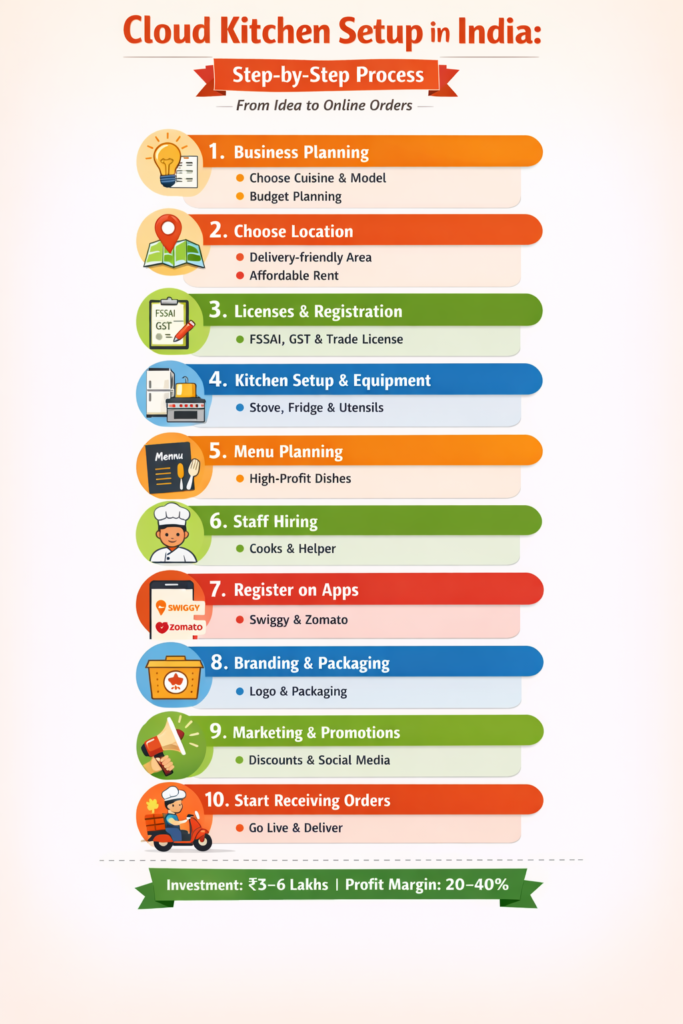
Step-by-Step Cloud Kitchen Setup in India
1. Choose the Right Cloud Kitchen Business Model
Before setting up, decide which model suits your budget and goals.
Popular cloud kitchen models in India:
- Single-brand cloud kitchen
- Multi-brand cloud kitchen
- Aggregator-based cloud kitchen
- Franchise cloud kitchen
👉 Beginners usually start with a single-brand cloud kitchen.
2. Select a Suitable Location
Location plays a major role in delivery speed and order volume.
Ideal location tips:
- Residential or semi-commercial areas
- Near high-demand delivery zones
- Affordable rent (₹10,000–₹40,000/month)
- Easy access for delivery partners
💡 You don’t need a main road location—delivery is everything.
3. Cloud Kitchen Setup Cost in India
The total investment depends on city, menu, and scale.
Average cloud kitchen setup cost:
- Kitchen rent & deposit: ₹50,000 – ₹1.5 lakh
- Kitchen equipment: ₹1.5 – ₹3 lakh
- Licenses & registration: ₹10,000 – ₹20,000
- Raw materials: ₹30,000 – ₹50,000
- Marketing & branding: ₹20,000 – ₹40,000
Total investment:
👉 ₹3 lakh to ₹6 lakh (starter setup)
4. Cloud Kitchen Licenses & Registration Required
Legal compliance is mandatory in India.
Required licenses:
- FSSAI license (mandatory)
- GST registration
- Trade license (local municipal body)
- Fire safety certificate (if required)
- Shop & Establishment Act registration
💡 FSSAI registration alone can cost as low as ₹2,000/year.
5. Cloud Kitchen Equipment List
You don’t need fancy equipment—only essentials.
Basic cloud kitchen equipment:
- Commercial gas stove or induction
- Refrigerator & deep freezer
- Exhaust & chimney
- Preparation tables
- Storage shelves
- Mixer, grinder, utensils
- Food packaging containers
👉 Buy equipment based on your menu to avoid overspending.
6. Design a Profitable Cloud Kitchen Menu
Your menu decides your success.
Best menu tips:
- Keep a limited menu (10–15 items)
- Choose items with high profit margin
- Avoid items with low shelf life
- Focus on popular cuisines (biryani, rolls, Chinese, combos)
💡 Combo meals increase average order value.
7. Register on Swiggy & Zomato
Food delivery platforms bring most orders.
Documents required:
- FSSAI license
- GST certificate
- Bank details
- Menu & food images
- Kitchen address
Once approved, optimize:
- Food photos
- Pricing
- Descriptions
- Offers & discounts
8. Cloud Kitchen Marketing Strategy
Marketing is key to growth.
Effective cloud kitchen marketing ideas:
- Introductory offers on Swiggy/Zomato
- Instagram & WhatsApp marketing
- Google My Business listing
- Influencer food reviews
- Loyalty discounts & repeat offers
💡 Branding matters—even online.
9. Staff Requirement for Cloud Kitchen
You can start small.
Basic staff:
- 1–2 cooks
- 1 helper
- Delivery handled by platforms
As orders grow, expand your team gradually.
10. Profit Margin & Growth Potential
A well-managed cloud kitchen can earn:
- Monthly revenue: ₹1.5 – ₹4 lakh
- Profit margin: 20%–40%
- Break-even: 4–6 months
You can scale by:
- Adding new brands
- Expanding to new locations
- Offering catering or bulk orders
Advantages of Cloud Kitchen in India
- Low investment food business
- Minimal risk compared to restaurants
- Easy expansion
- No front-end staff
- High demand in urban areas
Common Mistakes to Avoid
- Poor food quality
- Overloaded menu
- Ignoring food cost calculation
- No branding or marketing
- Late delivery & bad packaging
Is Cloud Kitchen Profitable in India?
Yes! With the right location, menu, and marketing strategy, a cloud kitchen can be highly profitable and scalable.
If you want to start a food business with low investment and high growth, cloud kitchen is one of the best options in India today.
FAQs – Cloud Kitchen Setup in India
Q1. Can I start a cloud kitchen from home?
Yes, if your local authority allows and you have FSSAI registration.
Q2. Is GST mandatory for cloud kitchen?
Yes, if you sell via Swiggy/Zomato.
Q3. How long does it take to start?
15–30 days with proper planning.